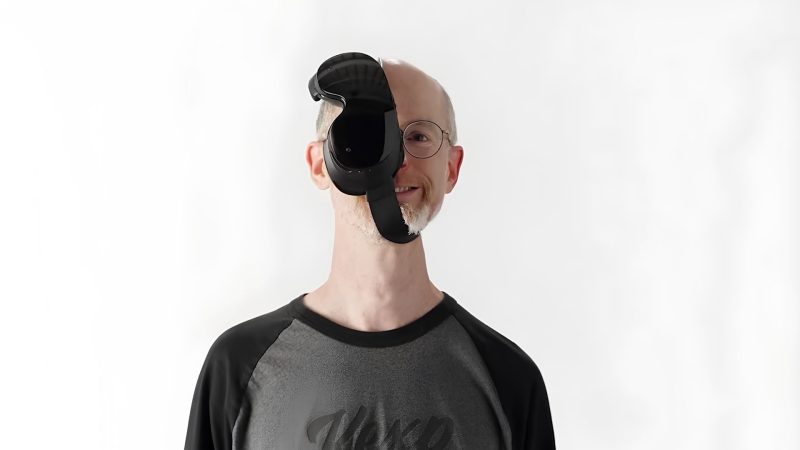
What if the VR headset you use for gaming could actually help save lives in the emergency room? That's exactly what doctors in Turkey have been exploring, and the results are pretty fascinating.
In a small independent study, emergency medicine specialists at Ankaha Bilkent City Hospital in Ankara found that a combination of peaceful VR environments and classical music can lower blood pressure and stress levels more quickly than regular medication alone. They presented their findings at EUSEM 2026, the European Emergency Medicine Congress.
Dr. Safa Dönmez, an associate professor of emergency medicine at the University of Health Sciences in Ankara, explained the motivation behind the study: "Patients who arrive in the emergency department with markedly elevated blood pressure—readings of 180 mmHg or higher on the top number, or 110 mmHg or higher on the bottom number—are extremely common. The emergency department environment itself—the noise, the bright lights, the uncertainty—can make that worse. This made me wonder: if we could help patients feel calmer, could we also help their blood pressure come down faster?"
So Dönmez and his colleague Dr. Kadir Yenal set up a study with 65 patients experiencing hypertensive urgency. All received standard blood pressure medication, but half were also given a VR headset showing a calming nature scene while classical music played through a smartphone. The control group of 65 patients only got medication.
The results? Patients in the VR group saw 12%-15% drops in anxiety and blood pressure compared to the control group after just 15 and 30 minutes. "After 15 minutes, patients in the VR group had both a lower absolute blood pressure reading and a greater reduction from their starting point, compared to the control group," Yenal reported. "This was a statistically significant finding, meaning it was unlikely to be due to chance. After that, the gap narrowed, and from 60 minutes onward the two groups were essentially equivalent."
Dönmez added, "For patients, the significance of the study is that if you were brought into an emergency department with markedly elevated blood pressure, frightened and in pain, then being offered a few minutes in a peaceful virtual forest while listening to Mozart would likely be welcomed."
Does this mean every ER will soon have VR headsets on hand? Probably not—especially with headset prices going up. But enterprise versions of devices like the Pico 4 Ultra and HTC Vive are already used in fields like firefighting and medicine. Yenal believes VR could be "a supportive, patient-centered addition to standard care, especially for patients who are visibly anxious or distressed." One abstract committee member noted that while it's a single-center study, the results "deserve further investigation" and might even help avoid unnecessary medication.
So next time you're stressed, maybe throw on your VR headset, crank up some Debussy, and take a few deep breaths. What do you think—would you try VR to calm down in a medical setting?
Comments (0)
Log in to join the discussion
Log InNo comments yet