Ever wondered what it'd be like to rewind time and save four heroes from dying? That's exactly what Fire Emblem: Thousand Threads asks you to do, and after 40 hours, it's clear this is one massive game.
The story kicks off in the ancient land of Tagza, where everything's already dead and broken. The goddess Sothis calls your soul from a cradle and sends you to bring light back to the darkness. Guided by another god, Futona, you're placed in a high-tech pod and reborn as an artificial "Mediator." But when you reach the imperial capital with the last two guides, Red Flower and Troia, you find a city of corpses—and every hero from this world turned into a walking dead attacker. Your job? Use Futona's power to rewind time five years to the Grand Sword Tournament and change the fate of four heroes so they survive to the final battle.
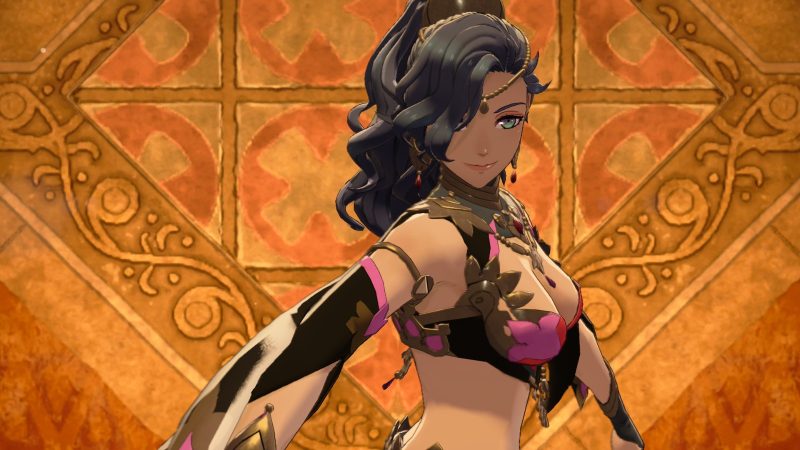
Those four heroes are Kay, a boy fighting to save his father from execution; Ditrich, a beautiful sword demon who drifted from Fódlan seeking strong foes; Theodora, a new queen with monstrous strength chasing a centuries-old national dream; and Reda, a gorgeous musician out for revenge after her family was destroyed by conspiracy. You'll see the past through all four, and the game's story is split into three parts: the Grand Sword Tournament, the War chapter, and the Salvation chapter.
Here's the crazy part: it's not just four protagonists—it's eight. While the tournament timeline is shared, other heroes are doing their own things, so new NPC dialogues and recruitable characters keep popping up. Each protagonist has their own special story chapters, plus four to five dedicated story characters each. You'll spend so much time watching interactions that you'll forget there's a tactics battle to fight. Recruit conditions vary by route and stance, and some characters—like Seiros-related Sithis—can't be recruited on certain paths. You'll even find yourself planning trips back to the capital on Sundays because meals and training are half price. Every coin counts.
Combat changes a lot from Three Houses. The formula is similar, but there's a new "Build" stat that makes heavy gear easier to wear. Regular attacks no longer consume durability—only Combat Arts do. Some overpowered skills got nerfed hard: Swift Strikes went from guaranteed no-counter to just 20% activation, and Bernadetta's strongest skill got hit with a movement penalty. Ice Lance is gone, and Thunder Axe now costs 5 durability instead of 3. If you're used to Three Houses, you'll need to readjust. On the bright side, gauntlets and swords got buffed, and mounted units are strong thanks to Kay's ability to grab mounts. New classes like the ostrich-riding "Divine Camel" and a mounted "Epitaph" make cavalry even better.
Each protagonist also has special "Sacred Flame" combat arts that fill a gauge and change their performance. After finishing one route's first part, you unlock a "Fate Integration" system that lets you merge the best stats and skills from different routes into one character. It's a smart way to avoid Three Houses' repetitive playthrough problem. The first part is basically a tutorial—the real challenge starts in part two. If you're new, start with Kay. If you played Three Houses, try Ditrich for the other side of the story. Want a challenge? Theodora's route has fewer and weaker starting units. For something different, pick Reda.
After nearly 40 hours, I haven't even finished one character's full story, and the game easily looks like a 200-hour ride. The story, music, and combat quality are all top-notch. If it weren't for GTA6, this would be a lock for Game of the Year. Fire Emblem: Thousand Threads is a Nintendo Switch 2 exclusive, priced at NT$2,080 for the digital version. Will you be picking this one up?
Comments (0)
Log in to join the discussion
Log InNo comments yet