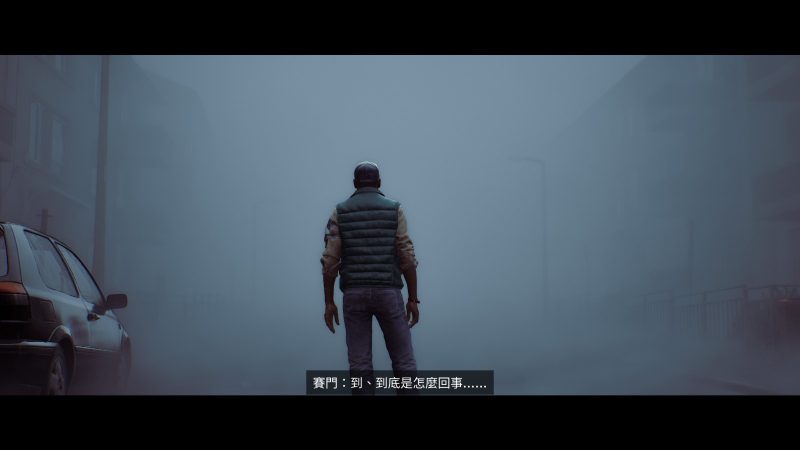
Ever wondered what it'd be like to wake up on a fog-choked island with nothing but a portable TV and a whole lot of dread? That's exactly the vibe of Silent Hill: Townfall, the first game in the series to go full first-person. Developed by Screen Burn and published by Konami, it follows Simon as he explores the abandoned St. Amelia Island. The story kicks off when a mysterious caller thanks him for coming back and asks him to find a nurse named Zoe. Pretty soon, Simon realizes he's slipped into somewhere... different.
The game constantly switches between characters and spaces to tell its story. Early on, you'll alternate between Simon and Zoe, and one chapter even puts you in Richard's shoes. At first, it's confusing why the game does this, but across six chapters, you'll realize that switching characters is actually part of the puzzle. The island itself is a ghost town—no residents, just empty houses you can search for documents and traces of the past. The otherworld mixes in industrial environments: narrow metal corridors, pipes, and machinery that hint at the town's downfall.
Gameplay-wise, Townfall shakes up the Silent Hill formula. Combat is dialed way down, and stealth becomes your main tool. Early on, you often have no effective way to fight back—your best bet is simply not getting spotted. Enemies aren't instantly alerted when you enter their view; you usually get a few seconds to duck back into cover. You can peek around corners and use radios or car alarms to distract them. Simon's key gadget is a CRTV, a portable analog TV that lets him scan different signals for clues, see past events, and even detect monsters through walls. Zoe, on the other hand, relies on her pager, which gives vaguer enemy directions and constantly receives malicious messages.
Each character plays differently. Zoe has almost no way to damage monsters, so her chapters focus on hiding and running. Simon can fight back with melee weapons like wooden planks and iron pipes, though they have durability and break after a few swings or blocks. Guns like pistols and shotguns are more reliable, but ammo is scarce—the game constantly nudges you to avoid combat. Richard's chapter, however, suddenly gives you way more firepower, making it feel like a different game entirely. The reason for these disparities only becomes clear later: the three characters have different perspectives on the same events.
The enemy variety is disappointingly small—you can count all types, including the boss "Burden," on one hand. For a ten-plus-hour horror game heavy on stealth, that's just not enough. But the few monsters you meet have names that seem symbolic. For example, one is called "Widow," making you suspect they're tied to the island's past. Stealth works well early on, but later, some enemies move extremely fast, attack from dozens of meters away, or track you in unpredictable ways. Once unkillable stalkers like Burden show up, the constant hiding and waiting can get frustrating. You'll spend a lot of time crouched in lockers waiting for them to leave.
Puzzles are another mixed bag. Many require you to understand your environment and devices, often involving medical themes like hearts, blood transfusions, blood types, and X-rays. One late puzzle has you reconstruct an accident, which is a great concept, but the hints are minimal and you have to figure out the whole process yourself. To make matters worse, an unkillable monster patrols the same area, so you're constantly switching between solving the puzzle and dodging. The game trusts you to figure things out, but for series newcomers, the late-game difficulty spike can be brutal. The pacing also drags—the main story could be told in 6-7 hours, but the actual playtime stretches to around 13 hours due to repeated stealth sections and waiting.
Visually, the otherworld uses intense red tones that dominate the screen for long stretches, creating a strong sense of oppression but also causing eye strain. The first-person perspective makes environments feel close and tense, but Simon rarely shows fear in cutscenes—the horror comes more from gameplay frustration than character performance. Storywise, Townfall is about a mining accident on St. Amelia Island. Oil drilling brought jobs and a community, but a safety incident killed many workers, contaminated the water, and led to illness and strained medical resources. Simon was a safety investigator who got caught in the accident, received blood transfusions from residents, and was bribed by CEG CEO Richard to falsify testimony, blaming a dead engineer. The monsters, including Widow, represent the victims and the community's suffering. Multiple endings depend on how many clues you find and how many monsters you kill—shooting everything leads to a worse outcome, which explains the scarce ammo. The game even seems to reference the real-life Piper Alpha oil platform disaster. As producer Motoi Okamoto said, Silent Hill is no longer just a place—it's a personal hell shaped by a character's trauma and guilt. St. Amelia Island is Simon's Silent Hill.
But understanding the design doesn't always make it fun. Townfall excels at using mechanics to tell a story—character abilities, monster designs, puzzles, even saving and reviving all feed the narrative. Yet the limited enemy variety, constrained stealth options, and endlessly chasing stalkers make it a tough recommendation for series newcomers. If you love hardcore puzzles, though, it's a worthy challenge. Will you be picking this up, or are you waiting for a sale?
Comments (0)
Log in to join the discussion
Log InNo comments yet