What makes a studio legendary? For BioWare, it's a legacy of groundbreaking RPGs that defined genres and captured hearts. But now, the studio has been bought by a private investment group, and history shows that venture capital frequently kills what it touches. It's a sad end for a company that started with two doctors, Ray Muzyka and Greg Zeschuk, who quit medicine to pursue their dream of making computer role-playing games.
Everyone knows Baldur's Gate now thanks to Larian Studios' Game of the Year-winning Baldur's Gate 3, but younger gamers might not know that the first two Baldur's Gate RPGs were built by BioWare in the late '90s. While they weren't the studio's first games – that honor goes to the 1996 mech action-sim Shattered Steel – they were the two that put BioWare on the map. Each was an incredibly deep and sprawling RPG based on the Dungeons & Dragons ruleset that was good for upwards of 200 hours of gameplay. Baldur's Gate 1 even took home IGN's Game of the Year award in 1998 over Half-Life.
After another action-game pitstop with 2000's MDK2, BioWare returned to role-playing with Neverwinter Nights, another CRPG that arguably brought video games closer to the pen-and-paper D&D experience than any game before it. It was the runner-up for IGN's Best Role-Playing Game of 2002, finishing behind just The Elder Scrolls 3: Morrowind. Up to this point, BioWare had primarily been known in PC circles as a prominent CRPG developer. And then Microsoft made a deal with the studio and LucasArts to develop an exclusive new Star Wars RPG for the fledgling Xbox console.
You already know the result: the absolutely unimpeachable Star Wars: Knights of the Old Republic. It is unquestionably one of the best RPGs ever made and a lock for top-3 Star Wars games of all-time. It told an incredible story in Star Wars's ancient past and truly let you embrace the Light Side or Dark Side of the Force. Its plot twist is legendary, and on the off chance that the long-in-development-hell remake ever comes out, we won't spoil it for you here. But whether it was visiting plenty of planets, bonding with your party members (shout-out to HK-47!), or planning out your evil Force attacks, KOTOR was the ultimate pairing of a beloved IP and an industry-leading developer.
Another Xbox console exclusive followed, albeit from a different team within BioWare. While KOTOR director Casey Hudson was planning something even bigger, another crew delivered the sublime and historically underrated Jade Empire, steeped in Chinese mythology. IGN gave it a 9.9 out of 10 back in 2005, and while it was nowhere near the commercial success KOTOR was, it was every bit as big a hit with critics and fans. And then came Mass Effect. BioWare promised us a space opera – a trilogy in which our choices in each game would carry over to the next and ultimately affect the ending. Microsoft wisely signed it as a console exclusive, and boy oh boy did it pay off.
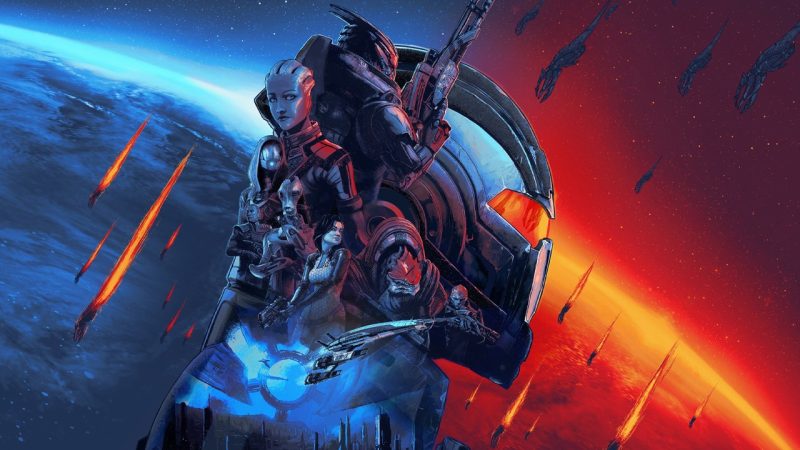
Mass Effect was released in fall of 2007, the greatest stretch in Xbox and quite possibly gaming history – and it actually delivered on its space-opera promise. As your custom Commander Shepard, the first in the trilogy introduced us to the universe and humanity's place within it, including Shepard's path to becoming a galaxy-protecting Spectre. It introduced the Reapers and so many phenomenal companion characters from Wrex to Garrus to Liara. And like KOTOR, it too allowed you to be a Paragon of good or a Renegade of evil. The first is a personal favorite of many, but for others, Mass Effect 2 is the peak, leveling up your relationship with Shepard's companions and more or less building the entire campaign around them. Your save file imported into the sequel, bringing with it your Shepard's look and choices. It also evolved Mass Effect's gameplay from light turn-based, semi-tactical combat to more of a pure third-person cover shooter while sacrificing none of its role-playing elements.
The controversial trilogy-capper is best remembered for its ending, which upset fans so much that BioWare tried to improve it in a post-launch patch. But forgotten alongside that is how great the rest of it was. It took the time to really let you – and your Shepard – say goodbye to the friends you'd made along the way, and its combat was improved further over Mass Effect 2, making Mass Effect 3 a truly world-class third-person shooter alongside its well-established role-playing bona fides. Whatever your thoughts of Mass Effect 3's ending, BioWare had done something remarkable. What's your favorite BioWare memory? Will you be revisiting any of these classics?
Comments (0)
Log in to join the discussion
Log InNo comments yet