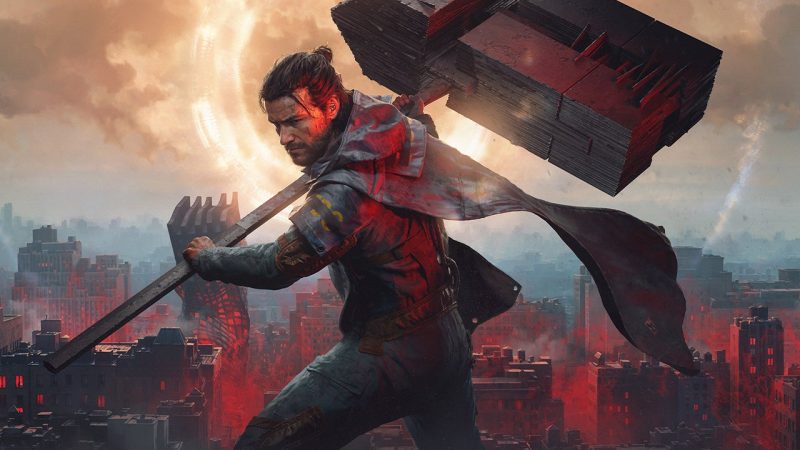
Ever feel like a game is holding your hand a little too tightly? You know the type: bright yellow paint smeared on every climbable ledge, or a glowing trail that practically drags you to your next objective. Some players love the clarity, but others feel it kills the joy of discovery. Well, Remedy Entertainment is taking a different approach with its upcoming open-world game, Control Resonant.
In a recent interview on the Dropped Frames podcast (via Kotaku), director Mikael Kasurinen explained why the team decided to skip heavy-handed navigation aids. For Remedy, it was crucial that players feel like they're the ones piecing together the game's convoluted world, not just following a series of flashing arrows. "It’s so important that the players feel like they’re the ones figuring it out," Kasurinen said. He added that while the experience is crafted, players need to feel like they're making their own decisions about what to do with the elements they encounter. If the game just says "go here," then it's no longer the player's decision—somebody else already decided for you.
Of course, Remedy knows this approach isn't for everyone. Kasurinen acknowledged that they risk alienating players who prefer a more guided, straightforward experience. But for those who really engage with the world, the payoff is a more rewarding and interesting journey. He wants players to come back, explore, and question whether they made the right choices. "I want that f***ing question," he said. "I want people to think like that. I want them to kind of, you know, doubt, go back, check again, see what they could do differently, because that’s life. That’s what makes it sticky and interesting."
Remedy isn't alone in this philosophy. Dominic Guay, General Manager at Invoke Studios, told IGN at gamescom 2026 that their upcoming game Warlock: Dungeons & Dragons also avoids traditional quest markers. The open-world single-player action-adventure ditches waypoints in favor of letting players explore, talk to NPCs, and figure things out on their own. It does have a compass that you can turn off, but the idea is to make discoveries feel earned. "We wanted them to engage with the world, to figure things out and feel that when they found things, it was based on their actions and not just blindly trusting a waypoint," Guay said.
This trend away from hand-holding comes after several high-profile games faced criticism for overbearing guidance. Marvel's Wolverine, for instance, was mocked for its "fart gas"—a blue mist that Wolverine could sniff to find objectives. Insomniac later added a toggle to turn it off. It seems developers are increasingly aware that players want agency, not a GPS.
Control Resonant itself is an open-world game with zones you can freely explore, though it won't always be crystal clear where to go. That's by design. IGN's review of the game returned an 8/10, praising its inventive world and the humanization that grounds its paranatural intrigue. Even when combat's sharp edge dulls, the game remains a great addition to the Remedyverse.
So, what do you think? Are you the type of player who loves getting lost and figuring things out, or do you prefer a little guidance to keep you on track? Will you be picking up Control Resonant when it launches? Let us know in the comments!
Comments (0)
Log in to join the discussion
Log InNo comments yet