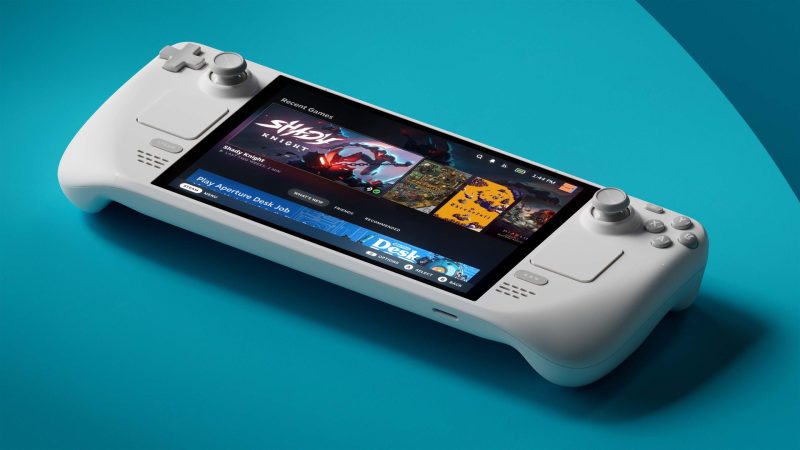
Ever wondered when Valve might finally give us a true Steam Deck 2? Well, a fresh rumor has just surfaced, and it points to a new AMD chip codenamed 'Gainsborough' as the likely heart of the next-gen handheld.
According to a video from YouTube channel Moore's Law is Dead, Gainsborough is the rumored APU that will power the Steam Deck 2. Now, MLID isn't everyone's favorite source, but they've had some solid leaks in the past, so it's worth a listen. The codename itself is a nice nod: the original Steam Deck's APU was called Aerith (after the Final Fantasy VII character), and Aerith's last name is Gainsborough. Cute, right?
So what do we actually know? Not a ton, but one key detail is that Gainsborough will be built on TSMC's N3P node—the most advanced version of TSMC's N3 family. That's a big deal for a handheld, because better efficiency means longer battery life. For context, the original Aerith chip was on TSMC's 7nm process, so N3P is two full generations ahead.
But will that be enough for Valve? Late last year, Steam Deck designer Pierre-Loup Griffais said Valve wants the Deck 2 to be a major leap, not just a minor bump. 'We're not interested in getting to a point where it's 20 or 30 or even 50% more performance at the same battery life,' he said. So N3P might seem old-hat compared to Apple's new N2 chips, but for a handheld, it could still deliver the goods.
MLID also reckons Gainsborough will use AMD's Zen 6 CPU and RDNA 5 GPU architectures—the same tech expected in next-gen consoles from Microsoft and Sony. For comparison, the rumored AMD 'Canis' APU for a PS6 handheld is said to pack four Zen 6c cores, two Zen 6 low-power cores, 16 RDNA 5 CUs, and a 192-bit memory bus. The Deck 2 could sport something similar. The original Deck has eight RDNA 2 CUs, so doubling that with much faster RDNA 5 cores could finally meet Valve's demands for a true step change.
As for when you can buy one? MLID says the Gainsborough chip should be ready late next year or early 2028. But given the ongoing AI-driven RAM shortage and the chaos it's caused for recent hardware launches (like the Steam Machine), Valve probably isn't rushing. In fact, waiting until late 2028 might be smart—it gives memory prices a chance to normalize. Fingers crossed.
What do you think? Are you holding out for a Steam Deck 2, or is your current handheld still keeping you busy? Let us know in the comments!
Comments (0)
Log in to join the discussion
Log InNo comments yet