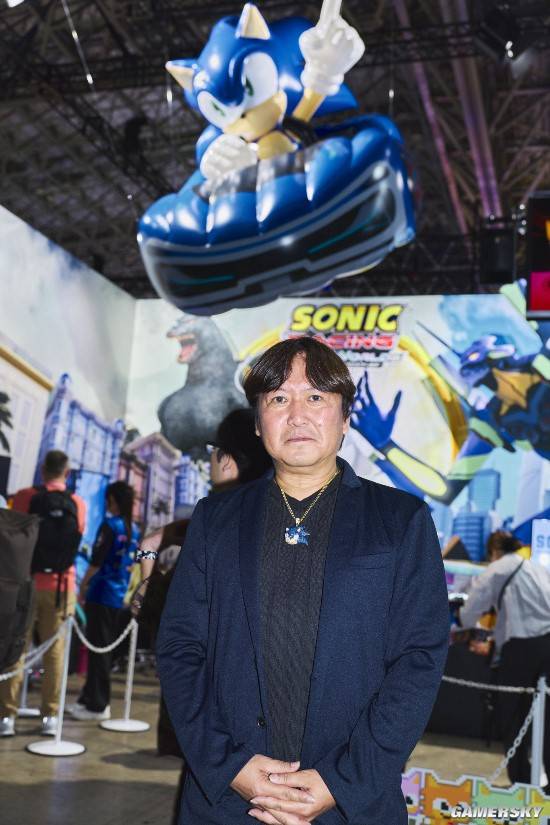
Sonic has been running for 35 years now, ever since he first burst onto the scene back in 1991. From those early 2D side-scrolling speed runs, to the 3D era kicked off by Sonic Adventure, all the way to the open-zone experiments of Sonic Frontiers, the blue blur has never stopped trying to break his own mold and find what comes next.
And these days, Sonic isn't just a game character anymore. Movies, cartoons, merch, and cross-IP collabs keep pushing him in front of new players and viewers. The long-term live service approach behind Sonic Racing: CrossWorlds, for instance, is giving this classic franchise some fresh challenges and possibilities.
To mark Sonic's 35th anniversary, we sat down with series producer Takashi Iizuka during TGS. He looked back at the big turning points in the series and shared his thoughts on where Sonic goes from here.
The short version: Iizuka says the jump from 2D to 3D with Sonic Adventure was the most influential shift. It gave Sonic a whole new sense of space and finally let the characters truly develop distinct personalities. But no matter how tech and gameplay evolve, that core feeling of "running fast and feeling great" is something that can never change.
On the surprise side, Sonic Mania showed the team that classic 2D pixel art still has serious pull. As for Sonic Racing: CrossWorlds, Season 2 will keep shaking up the racing experience with crossovers like Godzilla and Neon Genesis Evangelion, plus new modes and gadgets, while exploring what long-term console game operation can look like.
Iizuka also stressed that while movies and animation help Sonic reach more new players, games are always the core of the IP. Going forward, the plan is to lower the barrier to entry with different types of titles, satisfy hardcore fans, and keep growing Sonic's presence in China and across Asia.
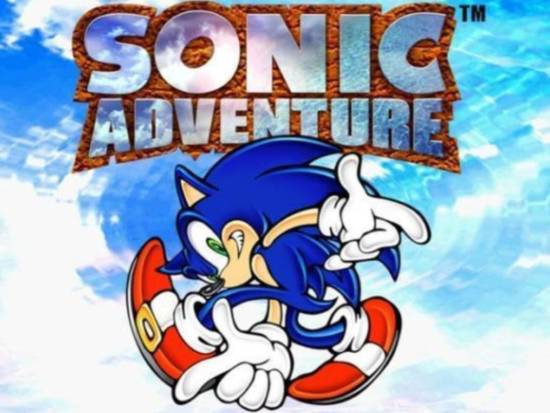
When asked which change had the biggest impact, Iizuka pointed straight to Sonic Adventure. Before that, the characters didn't even talk, so nobody really knew what kind of tone or personality they should have. Sonic Adventure gave them voices and, from there, each character started to feel distinct. It also introduced that high-speed 3D rush, and that lineage still runs through the latest Sonic games today.
On what must never change, Iizuka is clear: Sonic was born as a character who feels good to run with. From 2D to 3D, that feeling of free, high-speed movement across any terrain has always been the shared core of every Sonic game. But he also thinks there's still tons of room to improve how that core rush feels in each new title.
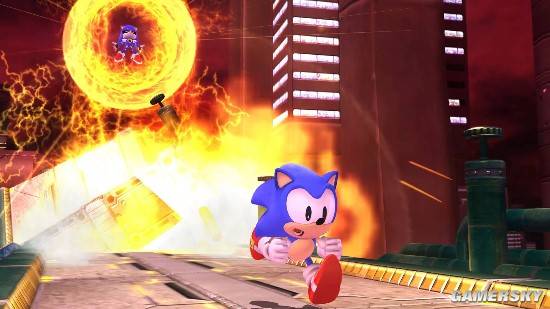
He also brought up Sonic Mania, which launched in 2017. Back then, with so many 3D Sonic games out, the team was genuinely worried that a new pixel-art Sonic might get a negative reaction. When they revealed it at the 25th anniversary event, they were nervous—but the crowd erupted in cheers. That moment showed them pixel Sonic still had a huge fanbase, and the game went on to sell and review well. For Iizuka, it was one of the most unexpectedly positive responses ever.
For Sonic Racing: CrossWorlds Season 2, the Godzilla and Evangelion crossovers were picked for their "unexpectedness." Iizuka says they want collaborations that feel different from Sonic, bringing surprise and fun. Both IPs are Japanese-born but globally famous, and the team worked closely with the rights holders to respect each franchise's world and please original fans.
After Season 1, the team gathered tons of player feedback and data—what events players loved, what looked good but didn't get played. Season 2 uses that to make events more engaging. And since racing games can get repetitive with the same tracks, they're focusing on changing how players play, adding modes and new devices to keep the base racing experience fresh.
Finally, on the live-service model, Iizuka notes that unlike mobile games with gacha, this relies on paid season passes, which is tough—especially on consoles. But if players keep buying passes, it supports ongoing development. And while multimedia helps Sonic reach regions where consoles aren't common, Iizuka's personal belief is absolute: games are the core. Everything else derives from them, never the other way around.
What do you think—should Sonic keep experimenting with live service, or stick closer to his single-player roots? Let us know in the comments.
Comments (0)
Log in to join the discussion
Log InNo comments yet