
Ray tracing is gorgeous, but it can eat your VRAM for breakfast. AMD might have just found a way to change that in a big way.
The company recently unveiled a research project called Tetrahedral Cages, and the numbers are wild. In a test on the Radeon RX 9070 XT, AMD managed to drop ray tracing VRAM usage for a large-scale scene from a ridiculous 80GB down to just 1.7GB. That's a 97.8% reduction, or roughly 47 times less memory. Yeah, you read that right.
So how does it work? The tech targets the BVH (Bounding Volume Hierarchy) overhead that comes with ray tracing. Normally, if a scene has tons of independently moving objects, the GPU has to maintain and constantly update a BVH structure for each one. When you're dealing with hundreds of millions of triangles, those updates get expensive fast, and your GPU can choke or even crash.
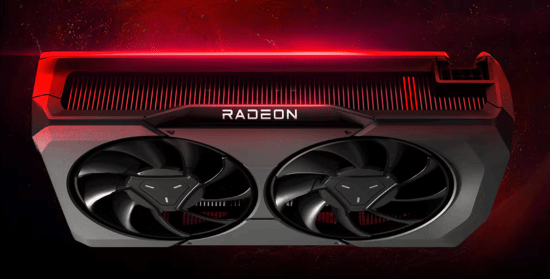
AMD's solution is a clever split between static and dynamic geometry. Dense models get wrapped in simple tetrahedral cages. Developers only animate the outer cage, while the high-density mesh inside and its BVH stay static and get reused. Before testing a ray intersection, the system transforms the ray back into the original coordinate space. This sidesteps the need to update millions of vertices in real time.
The performance gains are just as impressive. In a test scene with 25,000 dynamic plants, traditional BVH updates took over 300 milliseconds. AMD's new approach? Just 3.3 milliseconds. That's more than a 90x efficiency boost. VRAM usage also dropped from a GPU-killing 80GB to a mere 1.7GB. And when handling a scene with 500 million dynamic triangles, the RX 9070 XT held a steady 60+ FPS at 1080p.
But it's not a magic bullet for everything. The technique works best for dense scenes like grass, forests, crowds, or distant characters. Because it sacrifices fine-grained control over individual vertex animation, it can't handle complex animations that need precise deformation or topology changes.
The research already snagged a third-place award at High-Performance Graphics 2026. AMD is planning to release a C++ library and DXR interface examples, but there's no clear timeline for when this will actually show up in games.
Still, if this tech makes it into future titles, it could mean way more detailed worlds without melting your graphics card. What kind of game would you want to see push this to the limit? Let us know in the comments.
Comments (0)
Log in to join the discussion
Log InNo comments yet