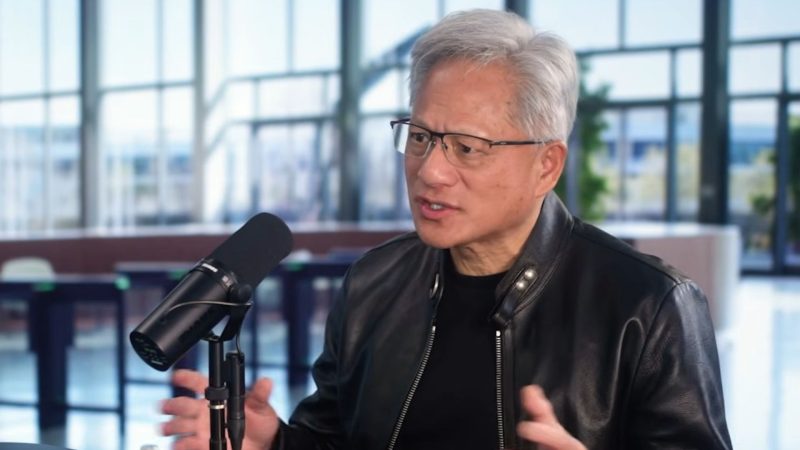
Ever feel like AI is moving too fast to keep up with? You're not alone—79% of Americans think AI will reduce jobs. But Nvidia CEO Jensen Huang has a different take, and he shared it on The Ezra Klein Show.
Klein pushed Huang on whether past lessons about protecting US jobs from Mexico and China should make us more worried about AI's rapid rise. Huang didn't dodge. "I'm always worried about the future," he said. "That's why I work so hard. I'm a, if you will, responsible optimist."
That optimism comes with a caveat. Huang acknowledged that "there are a lot of things that can go wrong" as his company pushes across every layer of the tech stack. But he drew a line: "Everything is hard. But it turns out that's not society's problem, that's my problem." In other words, he sees the burden of getting AI right as his to carry, so the rest of us can enjoy the benefits.
So what should society do? Huang's answer is simple: use the tech. "What we want to do, I believe, is to channel all of our worries into helping people be inspired by this technology and use it," he said. "Use it so that the technology doesn't just impact them, that it benefits them."
When Klein brought up that 79% stat and the fear that AI can replace people faster than ever, Huang flipped the script. "That coin has exactly two sides," he said. Because AI is so capable and smart, it's also easier to use. "You are empowered by that technology more easily than any technology in human history." He pointed out that while computers once required specialised coding languages, now "you just have to speak human."
Huang's message is clear: yes, the change is fast and scary, but that speed cuts both ways. "When I hear that the technology's happening quickly, and therefore it should give me anxiety—that's one way to receive it," he said. "The other way to receive it is that it's advancing so quickly, it's easier to use. So I should, as quickly as possible, use the technology so that I benefit from this transition, so you benefit from this new industry, and not just be impacted by it."
It's a familiar refrain from Huang: those who don't get on the AI train may get left behind. But not everyone is comforted by the idea that our future is in the hands of tech leaders, no matter how responsible they claim to be. Will you be hopping on the AI train, or are you still worried about where it's headed? Let us know in the comments.
Comments (0)
Log in to join the discussion
Log InNo comments yet