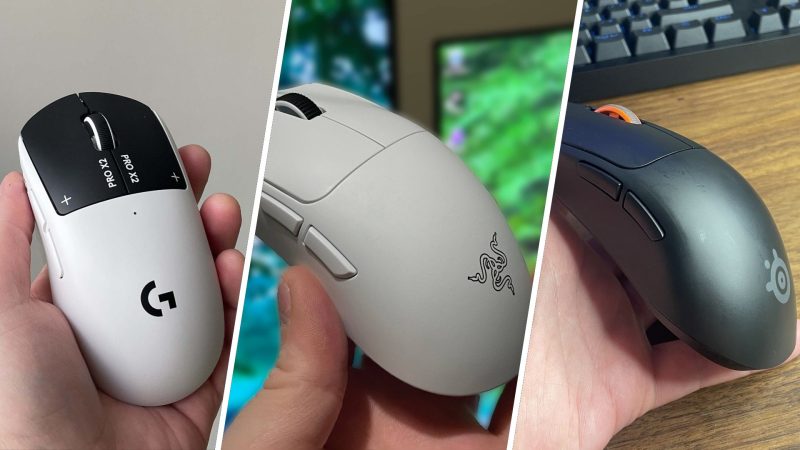
What comes to mind when you hear 'big brand competitive gaming mouse'? If you're like most gamers, you probably think 'expensive.' And you're not wrong—just look at this year's releases. The Logitech G Pro X2 Superstrike is $180, the Razer Viper V4 Pro is $160, the SteelSeries Rival Pro and Sensei Pro are each $180, and the new X3 Superstrike is $200. That's a lot of cash for a mouse.
But here's the thing: 2026 might be the year these big brands finally pushed gaming mouse technology forward in a way that matters. In the past, I would've been more critical of these prices, especially with impressive budget options from niche Chinese brands like the $89 Mchose K7 V2 Ultra+, which performs very well. But this year, Logitech, Razer, and SteelSeries have all introduced genuinely new tech that could change how we game.
Let's start with Logitech. They've introduced haptic-inductive (analogue) clicks, which let you adjust where the mouse button actuates. That means less time between deciding to click and actually clicking. You can also use rapid trigger to re-click as soon as you start lifting your finger. Logitech was the first to market with this tech, and they've already released an improved X3 Superstrike just seven months after the X2—which probably stings for early adopters.
Razer's big innovation is FrameSync. It syncs the mouse sensor's snapshots with when the microcontroller hands off data to your PC. This means fewer sensor snapshots are needed to maintain responsiveness, which saves battery. The Viper V4 Pro manages up to 180 hours of battery life at 1 kHz polling, and independent testing confirms FrameSync works as advertised.
SteelSeries was last to the party, but they brought ultra-wideband (UWB) wireless connectivity and 'true' 8K polling. UWB uses different frequency bands for supposedly more reliable connections. 'True' 8K means at 8 kHz polling, the mouse sends one packet per receipt instead of batching data. They also have hot-swappable batteries, though that's not entirely new.
So why does all this matter? Because big brands can absorb risk and push new tech into more hands through massive marketing. Even if you don't buy these mice, the innovations will eventually trickle down to more affordable options. Plus, competition from niche brands like Finalmouse and Keychron is heating up, so we'll likely see more advancements soon.
What do you think? Are these new technologies worth the premium price, or will you stick with your current mouse? Let us know in the comments!
Comments (0)
Log in to join the discussion
Log InNo comments yet