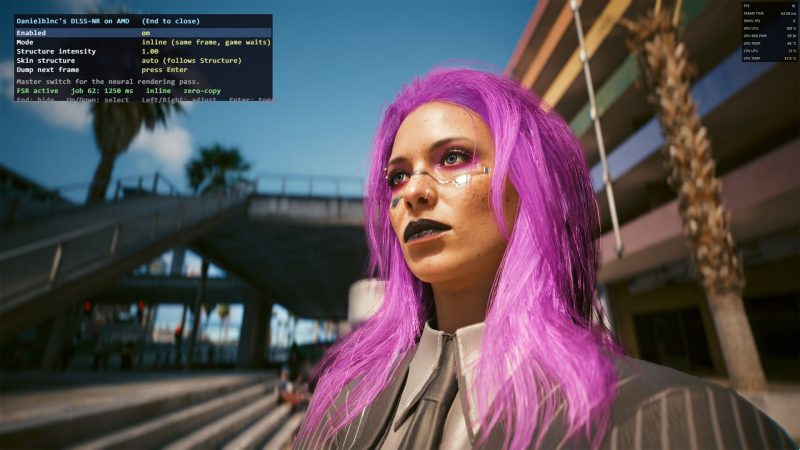
Ever noticed how lighting in games can make or break the atmosphere? AMD might have a new trick up its sleeve to make those shadows and reflections look even more realistic. According to a recent report, AMD researchers are working on a method that hands off indirect lighting to an image generation model. One of the researchers behind the method explained, "We try to solve global illumination as an image generation problem." That's a pretty big deal because global illumination is one of the most demanding parts of rendering.
So what exactly is global illumination? It's the way light bounces around a scene, creating soft shadows and realistic indirect lighting. Traditionally, it's super expensive to compute in real-time. But AMD's approach could change that by using AI to generate the lighting frame by frame. That means instead of calculating every bounce, the model predicts what the lighting should look like based on the scene. It's a bit like how DLSS uses AI to upscale images, but for lighting.
This isn't just a random experiment—it could be part of AMD's answer to DLSS 5 someday. Nvidia's DLSS has been a game-changer for performance and visuals, and AMD has been playing catch-up with its FSR technology. If AMD can pull off this AI-driven global illumination, it could be a major leap forward for Radeon graphics. Imagine playing your favorite games with lighting that looks almost cinematic, without tanking your frame rate.
Of course, there's no word yet on when this tech might hit consumer GPUs. The research is still in its early stages, and AMD hasn't announced any products based on it. But it's an exciting glimpse into where game rendering might be headed. AI is already transforming how we play, from upscaling to frame generation, and lighting could be the next frontier.
For now, we'll have to wait and see how this develops. But it's clear that AMD is thinking hard about the future of real-time graphics. If they can make global illumination as easy as generating an image, it could free up a ton of GPU resources for other effects. That means prettier games that run smoother—a win-win for everyone.
What do you think? Are you excited about AI-powered lighting, or do you prefer traditional rendering methods? Let us know in the comments!
Comments (0)
Log in to join the discussion
Log InNo comments yet