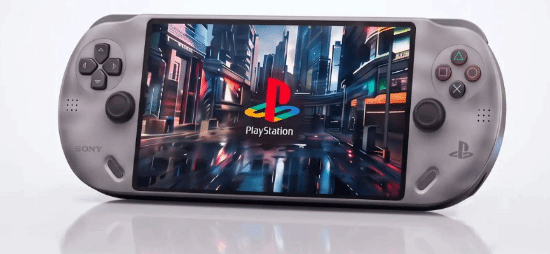
Sony's rumored next-gen handheld just got a whole lot more interesting. Thanks to a fresh batch of 2026 leaks, the so-called PSP 3 is starting to look like a genuine PS5 in your pocket—and the specs are wild.
According to reports circulating from multiple outlets, this device is expected to launch in late 2027 and will natively run PlayStation 5-generation games. At its heart is a custom 3nm AMD chip codenamed Canis, packing six Zen 6 cores—four standard Zen 6c cores and two power-sipping Zen 6 LP cores—paired with 24GB of unified LPDDR5X memory on a 192-bit bus. The whole single-die platform is reportedly capped at a strict 15W to 25W TDP.
On the graphics side, the chip integrates 16 RDNA 5 compute units with dual-issue FP32 support. In handheld mode, the GPU runs at 1.2GHz for a peak of 4.91 TFLOPS. But dock it into a dedicated expansion dock and the clock jumps to 1.65GHz, pushing theoretical performance to 6.75 TFLOPS—a roughly 37.5% boost. Without relying on third-party algorithms, that raw portable performance already matches last-gen discrete GPUs. The real game-changer, though, is Sony's own PSSR spectral super resolution tech.
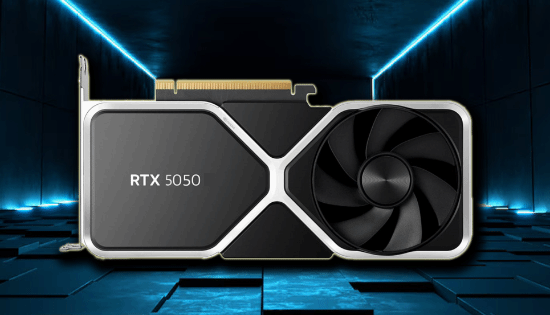
The leak claims that with an aggressive PSSR mode enabled, the shader units' direct compute load can drop by more than 50%. Combine that with the higher docked clocks, and the overall performance is said to be comparable to an NVIDIA GeForce RTX 5050 desktop card. On the software front, Sony has already introduced a "low power mode" on PS5, asking developers to dynamically lower render resolution and disable secondary effects to hold a steady 60FPS—clearly laying groundwork for handheld energy efficiency.
Storage and connectivity sound equally solid. The PSP 3 is tipped to pack a 512GB NVMe SSD with read speeds between 5.5 and 7.5 GB/s, enough to stream PS5-level game data seamlessly. The dock uses USB4 Version 2.0, supporting 4K 120Hz or 8K 60Hz video output, plus USB PD 3.1 fast charging at up to 240W. As for battery life, the leak estimates around 3 to 5 hours when running heavy PS5 games, stretching to 6 to 7 hours for indie titles and optimized PS4 games.

Now, the usual grain of salt: none of this has been confirmed by Sony. The final AMD Canis specs, how PSSR actually performs on real hardware, and the official launch timing and price are all still up in the air. But if even half of this pans out, the handheld market could be in for a serious shake-up.
What do you think—is a true PS5 portable worth the wait, or are you sticking with your Steam Deck? Drop your thoughts in the comments.
Comments (0)
Log in to join the discussion
Log InNo comments yet