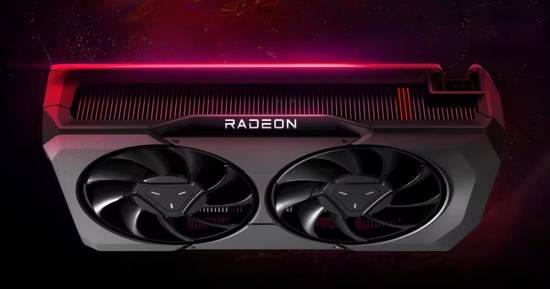
AMD Radeon owners, you no longer have to sit around waiting for Team Red to cook up its own DLSS 5 equivalent. The modding community has already stepped in, delivering a massive performance jump and an install process that won't make you pull your hair out.
According to Tweak Town, community modders claim they've boosted DLSS 5 neural rendering performance on AMD Radeon GPUs by a whopping 89%, all while rolling out a brand-new simplified installer. Thanks to modder Daniel Blanco's unofficial DLSS-NR-on-AMD project, Radeon users can now run DLSS-NR at noticeably higher frame rates and deploy it with a simple one-click setup.
Right now, there are two main runtime implementations doing the heavy lifting: Kien's dlss5-on-amd-9070xt-porting and Daniel Blanco's DLSS-NR-on-AMD. Both were built from scratch, using custom HIP kernels to get the DLSS 5 neural network running natively on Radeon hardware, rather than trying to convert NVIDIA GPU code on the fly. Daniel's version is still closed-source, while Kien's alternative is open-source.
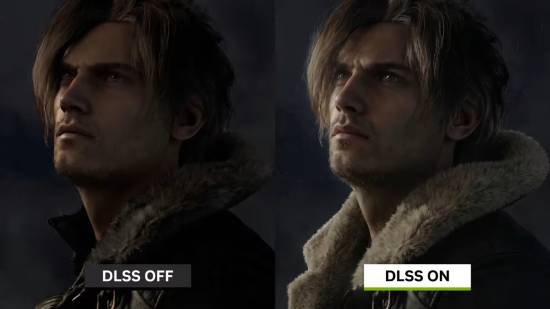
So where does that 89% figure come from? According to Daniel Blanco, Alpha 0.3.3 delivered a 23% performance gain over the previous version. Then Alpha 0.4.0 piled on another 42%, and Alpha 0.4.1 tacked on an extra 8%. Stack those three updates together, and you're looking at roughly 89% total improvement compared to v0.3.2. Not bad for just two weeks of work.
Kien's runtime has been getting love too, with the AMDNR 0.3.4 update. On an AMD Radeon RX 7800 XT running at 1440p with FSR Quality, the update cut neural network processing time from 73 milliseconds down to 52 milliseconds, a 29% reduction in render time. RDNA 4 GPUs also get a boost thanks to native support for the FP8/E4M3 data type. On top of that, the project adds experimental support for handheld APUs like the Z1 Extreme, Z2, Radeon 780M, and the newer 890M/880M class hardware.
All these gains come alongside the release of the AMDNR Launcher, a tool that handles installation and updates in just a few clicks. It lets you choose between Daniel Blanco's runtime and Kien/lmxxf's HIP runtime, while still giving you access to OptiScaler's fuller feature set. Before this, if you wanted to try any of it, you had to manually copy OptiScaler builds, runtime files, weight files, multiple DLLs, and config files into each game's folder. Yeah, not exactly plug-and-play.
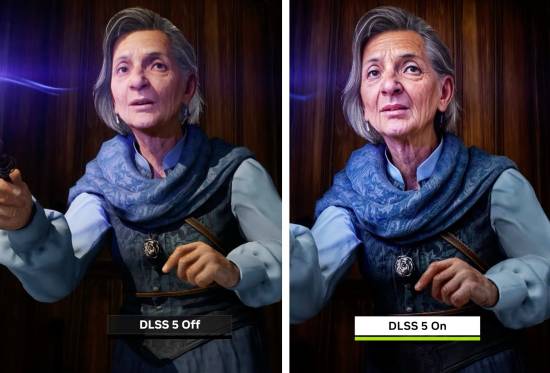
That said, there are still some real limitations. Reimplementing DLSS 5 with custom HIP kernels isn't a magic bullet. Even as developers increasingly tap into RDNA 4's native matrix operations and FP8 capabilities, neural network compute remains expensive on Radeon hardware, and fast-moving scenes can still expose visual artifacts. Also, because the mod relies on DLL injection, it only works with single-player games.
Still, for AMD fans who've been eyeing DLSS 5 from the sidelines, this is a pretty exciting workaround. Have you tried any of these mods on your Radeon card yet? Let us know how it went in the comments.
Comments (0)
Log in to join the discussion
Log InNo comments yet