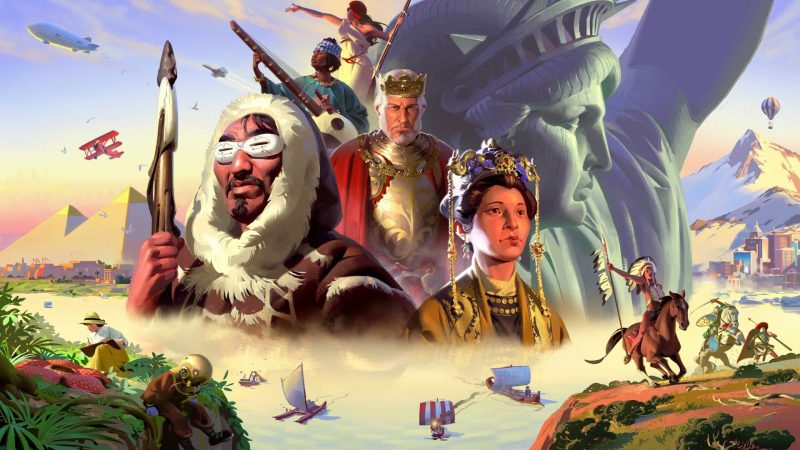
Ever wonder what happens when your carefully built desert empire suddenly wakes up to snow? That's exactly the kind of scenario Humankind 2 is leaning into, and after Civilization 7's rocky reception, Amplitude's timing couldn't be better.
Civ 7 famously had players pick a new civ at the dawn of each age, and that didn't sit well with a lot of folks. So it's a bit surprising that Humankind 2 also focuses on selecting new cultures as eras roll on—Egyptians becoming Berbers, Romans, or even English if the sandbox allows. But after sitting through a hands-off demo, the approach feels different. It's less jarring, more like one of many ways your playthrough takes on its own identity. There are 70 cultures total, and each one comes with its own customs, city aesthetics, and roles.
The other big talking point? Climate and biomes. Humankind 2 sees history as a back-and-forth: a culture is shaped by a biome, which is changed by that culture, which is then influenced by the biome again. Climate isn't static either—natural and unnatural disruptions can hit depending on chance and player or NPC activity. It's an intricate, almost materialist take on history, just one where Egyptians might find snow on their pyramids.
Your demo kicked off on a map of the actual Earth, dotted with tribes. Each tribe gets a "First Tale" tied to its starting territory—founding myths that act as kernels for full cultures later on. These grant buffs like extra Authority or Learning, and change tiles and citizen roles. Our tribe near modern-day Egypt got "Flood Tamer," meaning they used less water and were better at generating it. Amplitude says starting biomes will dramatically shape your game, especially as you unlock "Adaptations" like mudbricks, camel herding, and heat endurance to deepen your culture's affinity for its home.
But don't get too comfortable. Climate shifts like the Medieval Warm Period or Little Ice Age can turn biomes more arid or humid, blunting your carefully chosen adaptations. Toward the end of the demo, we jumped into a save where Egyptian civilization was blanketed in snow, ice climbing the pyramids, and its adaptations had shifted to warmth, whaling, and preserving scarce resources.
The goal is factions that feel distinguished by more than a different aesthetic and starting bonuses—uniquely tied to and shaped by the world around them. If your desert-adapted Egyptians marched into a jungle, they'd likely be at a serious disadvantage compared to native inhabitants. Amplitude even suggested you might willingly trigger a nuclear apocalypse to render the whole Earth arid if your culture excels there. Great for you, bad for your snow-loving enemies (and the billions of vaporized people, presumably).
Amplitude is also moving away from what it called "monolithic" cultures in Humankind 1—basically a unity, a building, and a bonus—toward a skill-tree-based system. Every culture has customs you unlock by tier and equip in limited bonus slots. As eras pass, you hit "Crossroads" points where you can diverge based on common history (free), shared land (costs culture points), or foreign contact (costs even more). New cultures bring new customs, aesthetics, and roles.
We've only seen Ancient Egypt in action, so it's too early to declare victory. But the pieces are in place for a 4X that makes each session feel genuinely different. What do you think—will you be picking this up?
Comments (0)
Log in to join the discussion
Log InNo comments yet