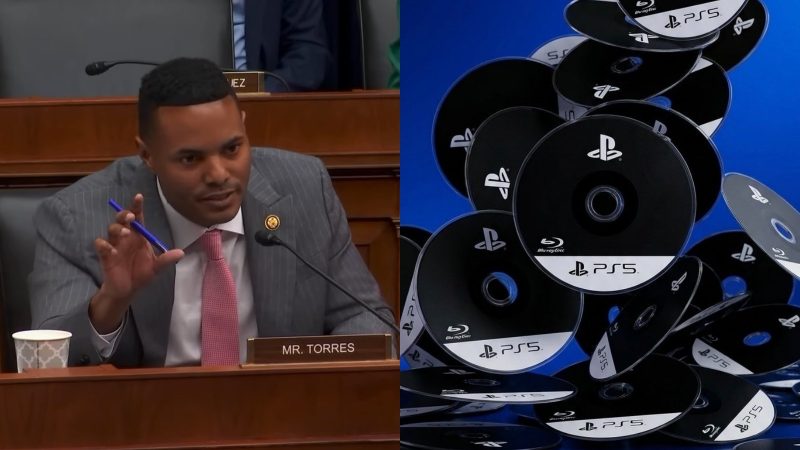
Ever bought a game, only to have the publisher pull the plug years later and leave you with nothing? A US lawmaker thinks that's a rip-off, and he's doing something about it.
Democratic Congressman Ritchie Torres announced on October 15 that he plans to introduce the Power To The Players Act. The bill would task the Federal Trade Commission (FTC) with setting rules that protect your right to own, play, and even transfer games you've paid for. In plain terms: if you bought it, it should be yours.
The proposal also targets online games directly. Developers would have to provide an offline mode before supported servers get shut down, so you can keep playing after the service ends. Torres didn't mince words: "When you pay for a game, you should own that game." He argued that a game a company can take back just by unplugging a server isn't a real purchase at all — it's a rental dressed up as a sale.
He's got a point about how digital games work today. Most are sold as licenses rather than true ownership, which means a publisher ending support or pulling a service can quietly strip away parts of what you paid for. For families saving up to buy games, that stings even more. Torres put it bluntly: families in the Bronx and across the country "deserve better than a license that can vanish at any time."
To make his case, he pointed to NBA 2K25. The basketball title was the fifth best-selling game in the US in 2024, with a standard edition priced at $69.99. It's set to stop being sold on October 30, 2026, and its online services will end on December 31 that same year. From January 1, 2027, multiplayer and other online features go dark, and once the servers close, MyCAREER and MyTEAM become unplayable, with no more VC to earn. Already-owned copies can still be redownloaded for offline modes like Play Now, MyNBA, The W, and MyWNBA — but that's only part of the package.
Torres frames this as an affordability issue too. He says the goal isn't to upend the industry, but to give players back what they had in the physical era — the ability to keep, play, and pass on the games they bought. His push echoes the Stop Killing Games movement, which has been campaigning against publishers making purchased games unplayable once online services die.
So what happens next? The bill is still just a plan for now, but it's a big signal that game ownership is becoming a real political topic. Will you be watching this one closely — and would you back a law like this?
Comments (0)
Log in to join the discussion
Log InNo comments yet