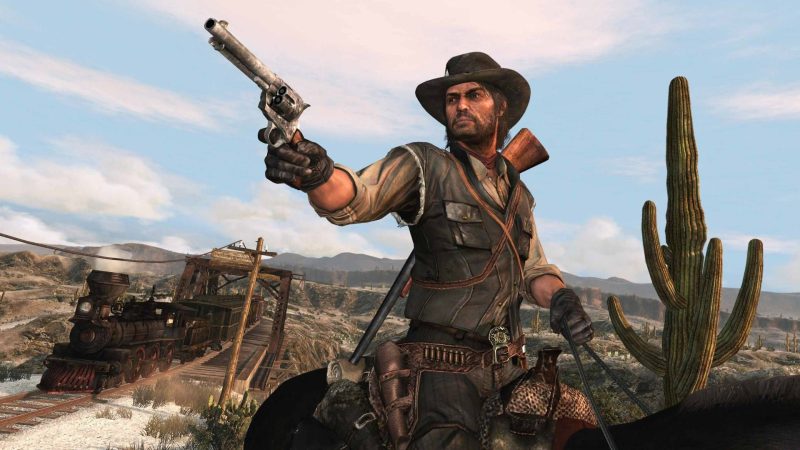
The final twist in Red Dead Redemption is one for the ages. After John Marston gets his revenge on Dutch Van der Lind, he himself is gunned down when a traitor gives away his whereabouts afterward. It's unexpected and heartbreaking, but the head writer was taken aback by the extreme reaction to the narrative choice. Rockstar co-founder Dan House was a long-time narrative lead at the studio before his departure in 2020. He was in the trenches for the first Red Dead Redemption, and he recalls the thought process with Christian Cantamessa, the lead designer, leading up to the climax. "He was into it, and I was into it, but just knowing the production realities of - how does an open-world game work if you've killed the protagonist?" Houser remembers, to IGN . "So I said, 'I think maybe we have to kill him.' And he goes, 'That's a great idea. Got to do it.' I said, ‘I don't know if... let me just think about this.'" Their departments were easy, because it's all storytelling, whereas there were large mechanical considerations. "The nature of an open-world game is you finish a story, then you go back into the world and wrap up all the side content if you want to," Houser says. "We'd have to play as someone else for that." They decided on Jack, John's son, who gets aged up three years to 19 in an epilogue timeskip. He becomes your character for the endgame side-quests and larfing around, opening a number of quandaries for the studio. "If you go and see a side character and they've got a three-mission arc and you've already done one mission, what would that actually mean if you came back? How would that work?" he adds. "We had to think through all of that stuff and concluded we could probably make it work, but we were still scared." It worked, but player reaction was mixed. People were taken aback by having the emotional crescendo followed by crushing aftermath, and Houser admits Rockstar didn't quite see it coming. "I think there was broad consensus that it was the right decision, but obviously it was an unusual and out-there decision, but I think the company had survived on making those decisions," he muses. "I think we were surprised when the game came out by how angry some people were about that decision. There were people who were livid with you. And part of you goes, ‘That's fantastic,’ because it means you've really engaged in the story and the characters." The drawback is that players might feel a bit put out and step away from the game. Obviously, that didn't happen, but Houser can see how it left a weird taste in people's mouths. And op top of everything else, he got to scratch a personal itch. "Now, I think it was the right decision because you want those big, strong reactions, but I think people were really confused by it," he says. "As a writer, it was like he had to die for the story to have any weight, and I had wanted that in several GTA s. We’d never done it really for the technical reasons we just discussed." Ahead of GTA 6, Rockstar narrative lead says the American Dream previous Grand Theft Auto games were critical of is "more modest now" but still "out of reach for the average person"
Comments (0)
Log in to join the discussion
Log InNo comments yet