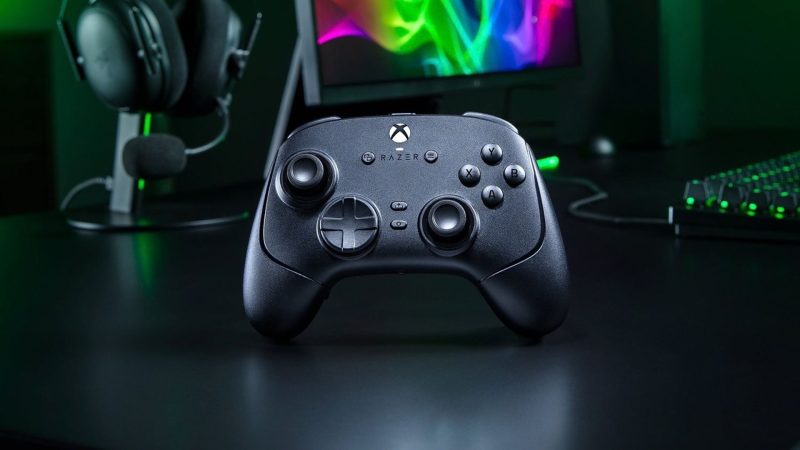
Did you see this coming? Razer just dropped the Wolverine V4 Pro, and it's making a bold bet against the industry's favorite thumbstick tech.
Two years after the Wolverine V3 Pro, Razer is back with the V4 Pro for Xbox Series X and PC. At first glance, it looks almost identical to its predecessor. But under the hood, Razer has swapped out TMR (Tunneling magneto-resistance) thumbsticks—the current gold standard—for something entirely new: swappable magnetic capacitive sensors. Razer claims these are even higher-resolution and more power-efficient than both TMR and Hall effect sticks. And yes, they're still immune to stick drift.
Why skip TMR? Razer says the swappable magnetic elements in the V4 Pro would cause performance issues with TMR sticks. So instead, they went with capacitive sensors that they say offer better precision. It's a gamble, but if it pays off, it could be a game-changer.
For PC players, the V4 Pro finally merges the best of both worlds. The V3 Pro had a separate 8,000Hz polling version for PC that dropped Xbox licensing. The V4 Pro does both: 250Hz on Xbox, and up to 8,000Hz on PC. No need to buy two controllers.
But there's a catch: Razer dropped the carrying case this time, yet kept the price at $199.99 / £199.99. When asked at Gamescom, the designers said people don't take their controllers on the go enough to warrant it. That might sting for those who used the case to store swappable parts and keep their pricey gear safe. The Tournament Edition—a wired, cheaper alternative—will also return for the V4 generation.
You still get plenty of swappable parts: different-sized thumbsticks, a cable, a wireless dongle, and magnetic blanks to remove the back buttons. There are four back buttons and two extra bumpers/shoulder buttons. The whole gamepad uses clicky microswitch buttons from Razer's esports mice, now with slightly adjusted actuation for more comfort. The triggers have stop switches too, turning them into microswitches for ultra-fast presses. And you can fine-tune everything via Razer Synapse, with four onboard profiles.
Razer is also emulating Scuf's magnetic faceplate design, so expect some cosmetic customization down the line. As a controller reviewer, I'm curious to see if Razer's bet on capacitive sensors pays off. TMR sticks are already imperceptibly fast, so can we really get more accurate? Only time will tell. But this is the first gamepad of its kind, and if it works, other brands might follow.
What do you think? Will you be picking up the Wolverine V4 Pro, or are you sticking with TMR? Let us know in the comments!
Comments (0)
Log in to join the discussion
Log InNo comments yet