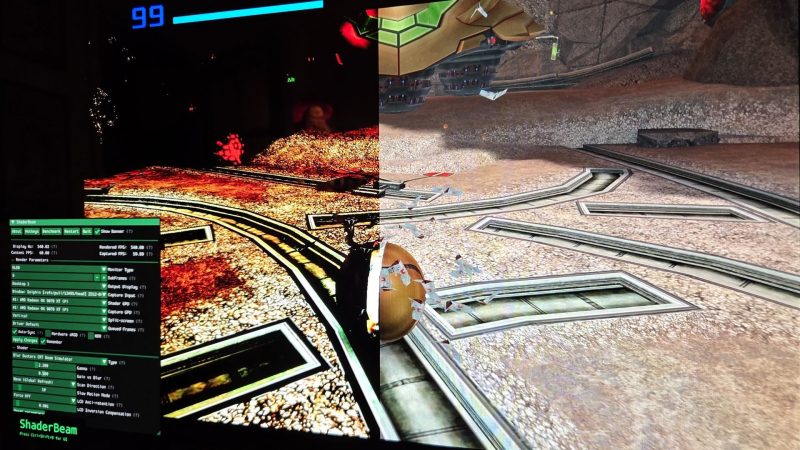
Remember when CRTs were the gold standard for gaming? Those bulky monitors had a certain magic—motion so smooth it felt like you were really there. Well, it turns out we've been trying to get that back for two decades, and 2026's OLED monitors are finally close. But there's a catch: Windows needs to change before we can reach true nirvana.
Let's rewind. Back in the mid-2000s, LCDs took over, and they were terrible for motion. Pixels took forever to change, leaving ghost trails on fast-moving images. We traded richer colors and smoothness for thinner, sharper screens. Mark Rejhon, founder of Blur Busters, says people over 40 remember CRT motion clarity, but younger folks have no idea what they missed. His Test UFO tool has been the go-to for judging motion clarity ever since.
Now, companies are fighting to bring that clarity back. Nvidia's G-Sync Pulsar uses backlight strobing and a rolling refresh to mimic a CRT's beam, creating a perceived 1,000 Hz clarity. But it's not on OLEDs yet and only works with Nvidia GPUs. Meanwhile, Rejhon and former Nvidia dev Timothy Lottes debuted a breakthrough algorithm in late 2024 that simulates CRT phosphor fade on 240+ Hz displays. It's like DLSS for motion—making 60 fps content look as smooth as 540 fps without needing a monster GPU.
I tested the Asus ROG PG27AQWP-W, a 540 Hz OLED monitor that's ideal for CRT simulation. It even has a 720 Hz mode at 720p. OLEDs can go completely black and get super bright, getting closer to CRT contrast. The high refresh rate helps recreate the electron beam scanning down the screen. But getting it working was a brain-melting experience. The tech is bleeding edge, and Windows doesn't make it easy.
The first implementation was a Retroarch shader, then a standalone app called ShaderGlass. But CRT beam simulation is so complex that developer Mausimus split it into a separate tool: ShaderBeam. It needs perfect synchronization with both the display and the input content—dropping a single frame causes noticeable flashing. That's where Windows becomes a problem. The OS isn't built for this kind of precision, and until it changes, we're stuck in almost-nirvana.
So, what's the takeaway? If you're a retro gamer or just love buttery-smooth motion, the hardware is almost there. But software and OS support are lagging. The dream of CRT clarity on a modern OLED is within reach, but it'll take more than just a fancy monitor. Will you be holding out for true CRT simulation, or are you happy with today's high refresh screens? Let us know in the comments!
Comments (0)
Log in to join the discussion
Log InNo comments yet