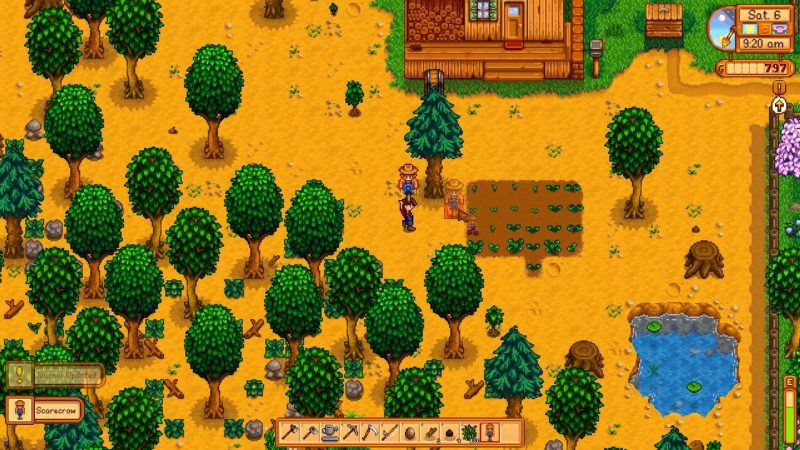
Ready to leave your soulless corporate job behind and build a thriving rural paradise? If you are diving into Stardew Valley, the iconic farming sim that celebrated its 10-year anniversary this year, restoring your late grandfather's rundown farm is your main priority. To bring the land back to its former glory, you need to clear debris, till soil, plant seeds, and upgrade your farmhouse and tools. Of course, all those upgrades take plenty of gold.
While you can make money through activities like fishing and mining, planting, harvesting, and selling crops is hands down your best path to a steady income. But before you start spending your hard-earned gold on seeds, you will want to get a handle on a few essential farming mechanics so your crops flourish without any hassle.
First off, your crops normally require daily watering to grow. However, whenever a rainy day arrives, Mother Nature takes care of that chore for you. Be sure to check the TV inside your farmhouse daily for the weather report so you can see when rain is on the horizon and plan your work ahead of time.
We also highly recommend crafting scarecrows and sprinklers as soon as you have the resources. Hungry birds can swoop in and eat the crops you worked hard to plant, but placing scarecrows keeps them away. Sprinklers will automatically water surrounding tiles, freeing you from manual watering even on clear days. Just remember that every season in Stardew Valley lasts 28 days, and almost every crop will wither when a new season starts, so timing is everything.
Since your farming journey begins in spring, you will want to focus on starter crops that build early wealth. Parsnips serve as your foundation. You receive your first batch of parsnip seeds for free, and you can pick up more at Pierre's General Store for 20 gold each. They take just four days to grow and sell back to Pierre for 35 gold apiece. That nets you nearly double your investment in just four days, making them ideal to stagger across your first spring for consistent cash.
Once you have saved up some funds from your initial parsnip yields, you can start investing in potatoes. Potato seeds cost 50 gold at Pierre's and sell for 80 gold, taking six days to sprout. Even though they require more cash upfront and take a couple of extra days, the profit per crop is double what you make on parsnips.
By pacing your plantings and staying mindful of the calendar, you can build a massive financial foundation before your first month in the valley wraps up. How are you planning out your very first spring harvest in Stardew Valley?
Comments (0)
Log in to join the discussion
Log InNo comments yet